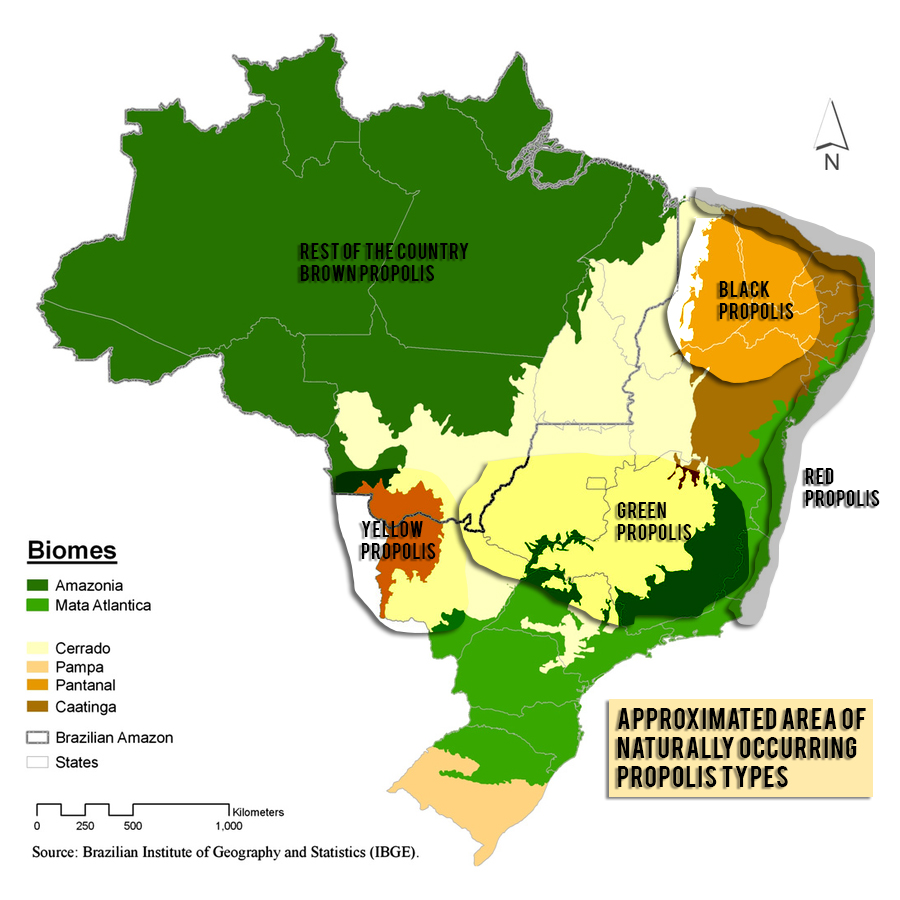
Brazil, with its diverse ecosystem, has five main propolis varieties. No other country in the world has such a wide variety of propolis types!
Propolis color depends on the raw material collected by the bees, which varies according to the region, giving to the propolis its distinct characteristic color and natural properties.
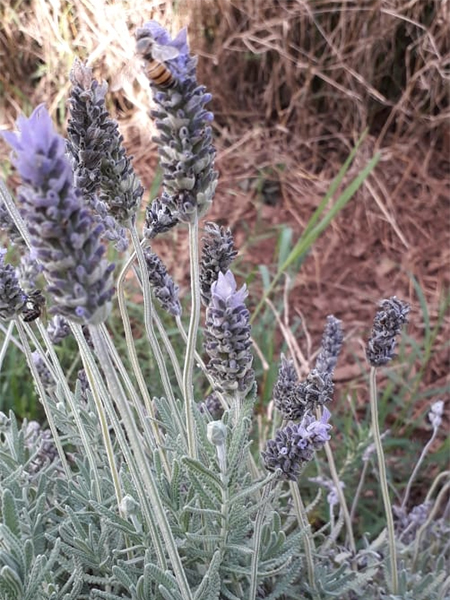
Green Propolis:
Green propolis main ingredient comes from the alecrim do campo sprout resin, Baccharis Dracunculifolia. This type of propolis has as a chemical marker a phenolic compound called Artepillin C, whose discovery patent belongs to Japan. This chemical compound (3,5-diprenyl-4-hydroxycinnamic acid) was able to inhibit the growth of tumors in in vitro tests. This type is produced mainly in the south, east, center and forest area of Minas Gerais, east of São Paulo, north of Paraná and in mountain regions of Espírito Santo and Rio de Janeiro.
Green propolis is known for its biological properties, such as: antimicrobial, antioxidant, anti-inflammatory, immunomodulatory, healing, anesthetic, anticancer and anticariogenic. It is the most famous Brazilian propolis, the most produced and consumed. It has a tangy taste, and a deep, strong smell that fills the room.
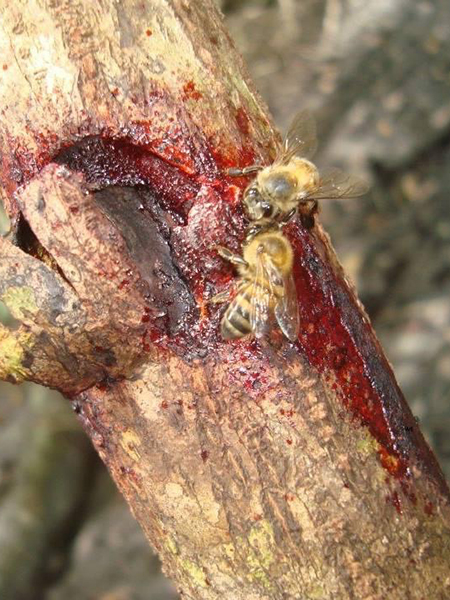
Red Propolis:
It is a type of propolis found in the coastal areas of the north and northeast of Brazil. They are collected in untouched mangroves of the states of Paraíba, Pernambuco, Alagoas, Sergipe and Bahia. The resin collected by the bees comes from a plant popularly known as the rabo de bugio, Dalbergia ecastophyllum. This plant´s sap has a vivid red color, giving this propolis its characteristic deep red color.
Red propolis has as its major constituent phenolic compounds, of the type flavonoids, anthraquinones and phenols. It has constituents never found in other types of propolis, and recent researchs showed anti-tumor and antioxidant activities in vitro. It is the most rare and expensive propolis in Brazil, and real state especulation on coastal areas are destroying what is left of pristine mangroves needed to collect this propolis. Only 2% of the Brazilian propolis production is red, and producers have to go deep in the bush to collect, sometimes camping near the hives for weeks. It has a resin-like taste.
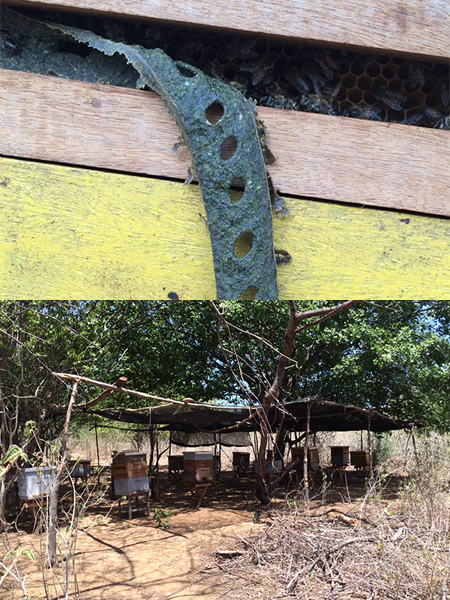
Black Propolis
Black propolis is an especific type found in a deserted area in the northeast of Brazil called caatinga. It involves several states, but the biggest production area is Ceará state. It is collected from a resin found on a tree called Jurema Preta, Mimosa Hostilis benth and mimosa tenuiflora.
No studies regarding this type of propolis, but local indigenous people have been using as medicine for a long period of time for its healing properties. It is a drier type of propolis, has a bitter taste, and the color goes from deep grey to black. The extract is brownish-black.
It is a miracle there are propolis producers in such a dry and hot area, the bees need water to be provided by the beekeepers. Since it is near the equator, it is hot all year around, and what they call ´winter´ is a small raining period that lasts two to three months.
During a small window, usually november and december, the propolis collected becomes a beautiful dark, olive, ´military´ green, like a black propolis ´special edition´.
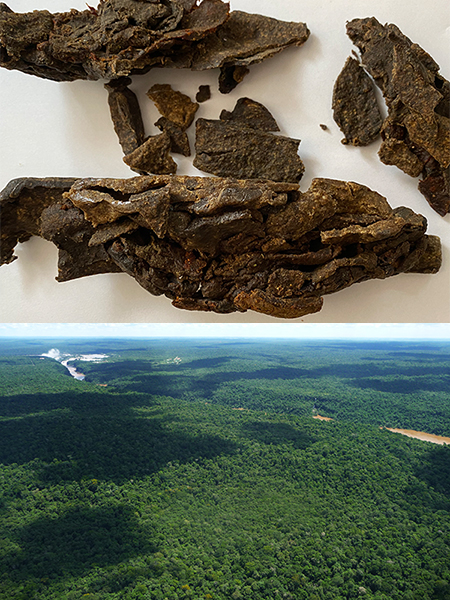
Brown Propolis:
Brown propolis can be found in the South, Southeast and North of Brazil. It has antimicrobial and antioxidant activity.
It is similar to European and American propolis in appearance, made from a mixture of different tree saps.
Every region has it is own type, from light brown to reddish brown, ones more stickier, others sweeter, or pinus-scented. It is a wild propolis, and color and appearance varies according to the year, region and season. High phenol content. It has a sweet taste.
Yellow Propolis
Yellow propolis is common in the Brazilian state of Mato Grosso do Sul. In general, it has low levels of phenolic compounds and flavonoids, mostly made from a mix of several tree resins.
It is known as yellow propolis, but the color is more amber-like, and it is naturally-occurring, not produced and sold commercially.
It were identified 15 compounds, all belonging to the class of triterpenoids, and low levels of phenolic compounds and flavonoids.
No substantial published researches regarding this type, although local indigenous people use it as medication.
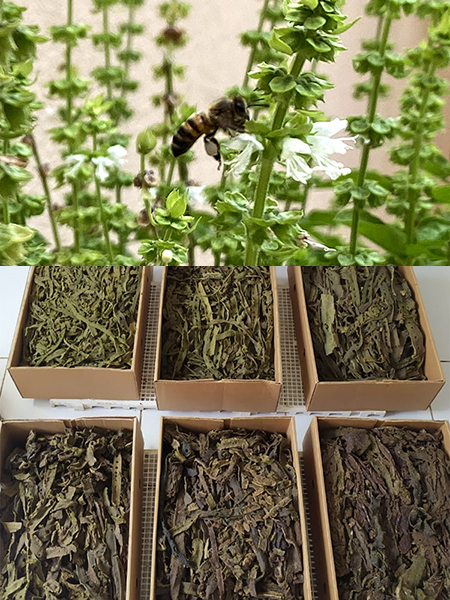
Propolis Subtypes
There are several propolis subtypes in Brazil, usually a mix of the five main types above. Since it is impossible to know exactly where the bees are going to extract propolis, propolis´ color output is always a bit of surprise. It becomes a problem for propolis producers, since when they obtain standard green type they sell it easier and for a better price. But it can be light to dark green, or brownish green, or yellowish green. Or light red, brownish red, or dark red. It will depend on the feeding ground, time of the year, season etc.
The propolis beekeepers adjust the feeding grounds based on the previous experience and feeling. Climate change is taking its toll, since seasons are becoming more and more unpredictable, making propolis production a challenging business. Beekeeping is ecologically correct, it helps nature´s growth through pollinization, and a good beekeeper is a sensible beekeeper, not pushing the bees to hard for increasing production, or they will end up with a lot of bees´ loss. Also, the problem of neonicotinoids pesticides, increasing bees mortality.
Propolis origins in Brazil
Until the late 1970´s, Brazilian beekeepers didn´t know what to do with the propolis they collected, so they usually discarded. Back then, propolis was scraped from beehives in larger than usual quantities, especially in the state of Minas Gerais, where they found an unusually naturally-occurred green propolis. The Japanese, heavy propolis users for centuries, found out about the discovery and started to buy all the could find, based on the pioneer work of Professor Yong Park discoveries and chemical analysis.
Professor Yong Park explains that plants, in the sprouting stage, are vulnerable to microorganisms and insects; to protect themselves, they produce enzymes that function like antibodies in humans. The hive, which holds the nectar of the plants, would be equally vulnerable to invaders. It happens that the bees have learned to collect the enzymes that protect the plants, closing with them the outer part of the hives.
In the meantime, honey (and adulterated honey) from China started to drive the international price down, making it harder for beekeepers survive only on honey production. Asian propolis demand and low honey price created the perfect storm, It was the beginning for for something unique to Brazilian beekeepers: the propolis-oriented beekeepers.
Propolis beekeepers are different because they don´t focus on honey production; in fact, they leave the honey to the bees, they need strong bees, and they induce the bees to produce propolis instead. Then it came the Brazilian beekeeper ingenuity: the Intelligent Propolis Collector (IPC).
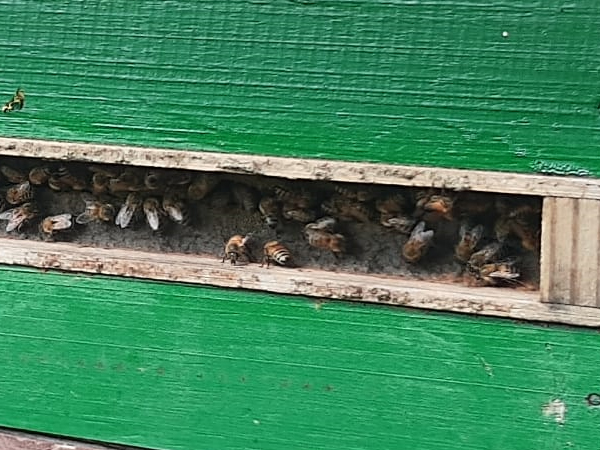
propolis in the making 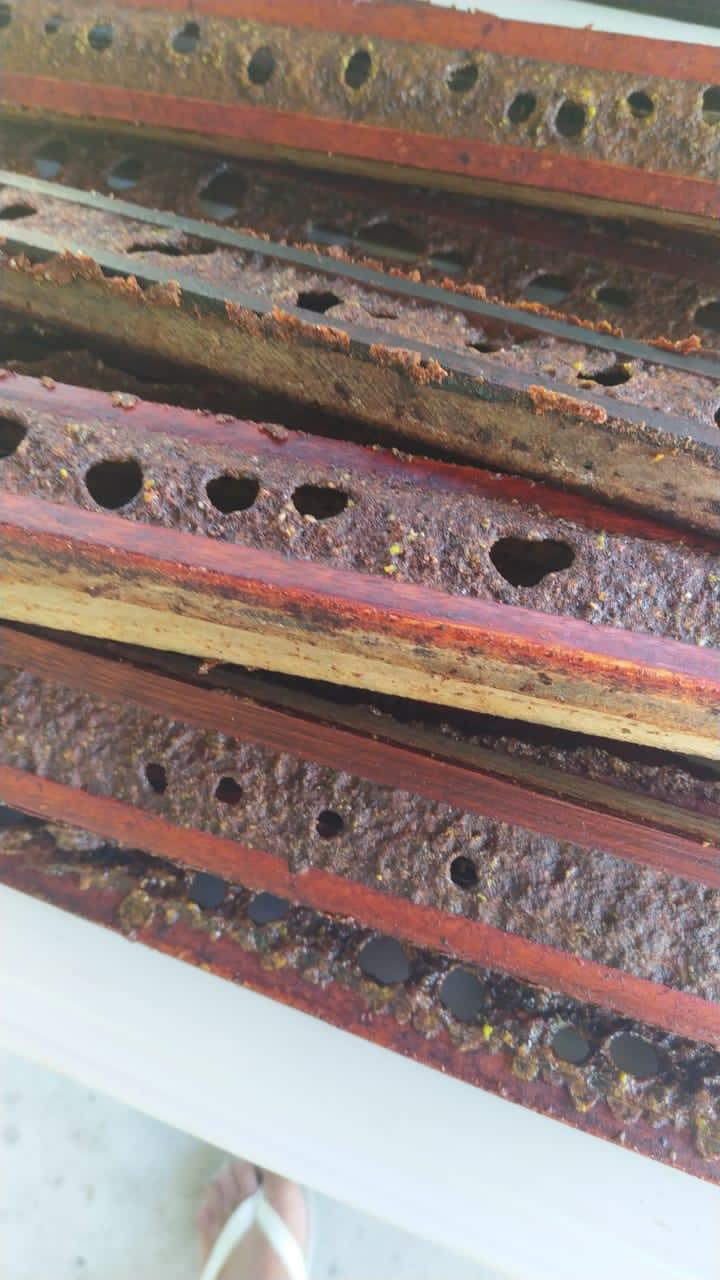
IPC ready to harvest 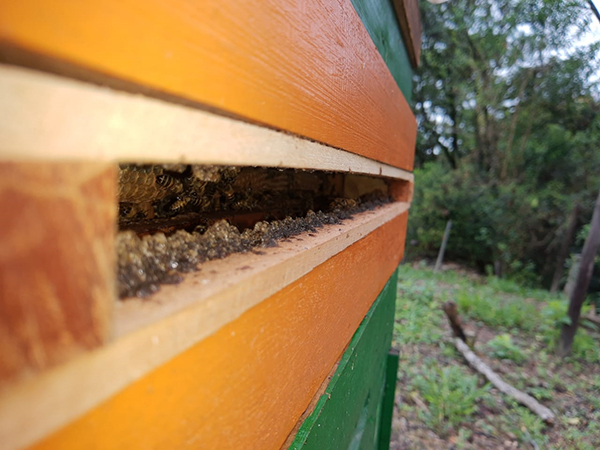
propolis in the making 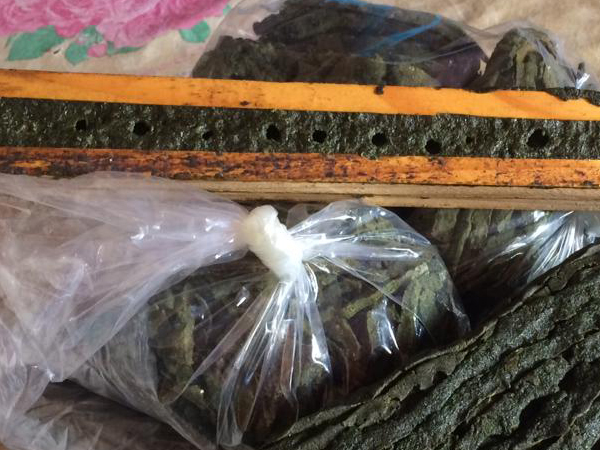
Collected propolis and on top, a propolis collector
The IPC consists of a rectangular wood frame , with a gap of around 1 ¼ inch by twelve inches, nested in the entryway of the hives. The bees are then induced to cover it with propolis, starting from the border toward the center. The gap can be wider or narrower, with several widths, depending on the season, and propolis raw material availability. The bees usually cover the gaps in a seven to seventeen day period. If the propolis covering is irregular or faulty, they decrease the gap. If the gap is covered faster than expected, they increase it. There is a lot of sensibility, a steep learning curve involved in mastering this proccess. The propolis stripes have holes in it, the bees leave it so they can enter inside the hive. Also, any insect invading the hive through the gaps are mummified with propolis after they are killed.
Several propolis beekeepers are third generation propolis beekeepers. And a lot of factors are involved in propolis production, like weather, rain availability, blossoming season. Propolis raw material availability is crucial.
The Brazilian beekeepers, over the year, started to select queens more prone to propolis production, in a case of induced darwinism.
The advantages of the IPC system are several: better quality propolis, fresher, cleaner, less human contact and thus less post-contamination, to name a few.
You get the perfect environment; a reliable supply of material for the bees to produce propolis all year-around, the diversity of the Brazilian flora, the endemic presence africanized bees, and propolis oriented beekeepers, with a vast amount of experience, making it harder for this proccess to be replicated anywhere else in the world. This is why the Brazilian propolis is unique.
Everywhere else in the world propolis are collected through nets, or meshes, or scraping. Net collector is good, but, in our point of view, there is no comparison with propolis collected through IPC. Net/mesh takes longer for harvest it, it requires more manual contact (increasing the risk of post contamination), and it mixes old propolis with new propolis. It is drier, brittle, since it is in chunks. Scraped propolis comes with wood pieces from the frames, it is collected in smaller pieces, higher presence of contaminants and a lot more manual contact. But, as we firmly believe in, all propolis are good. We just presented what we consider the superior aspects of Brazilian propolis production. And we intend to sell propolis from all over the world
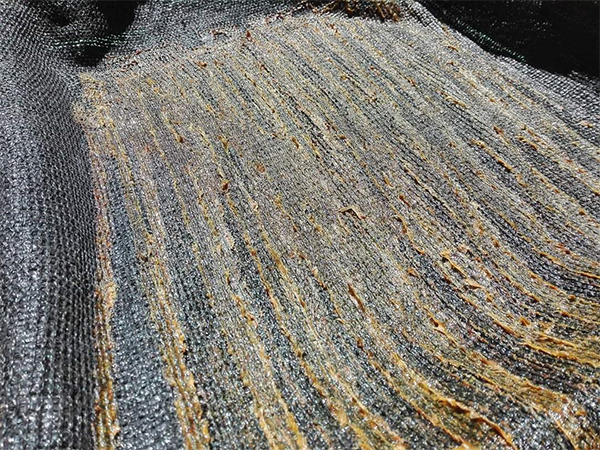
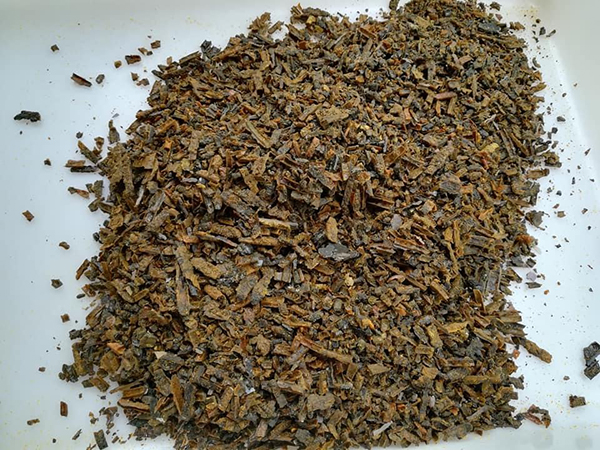
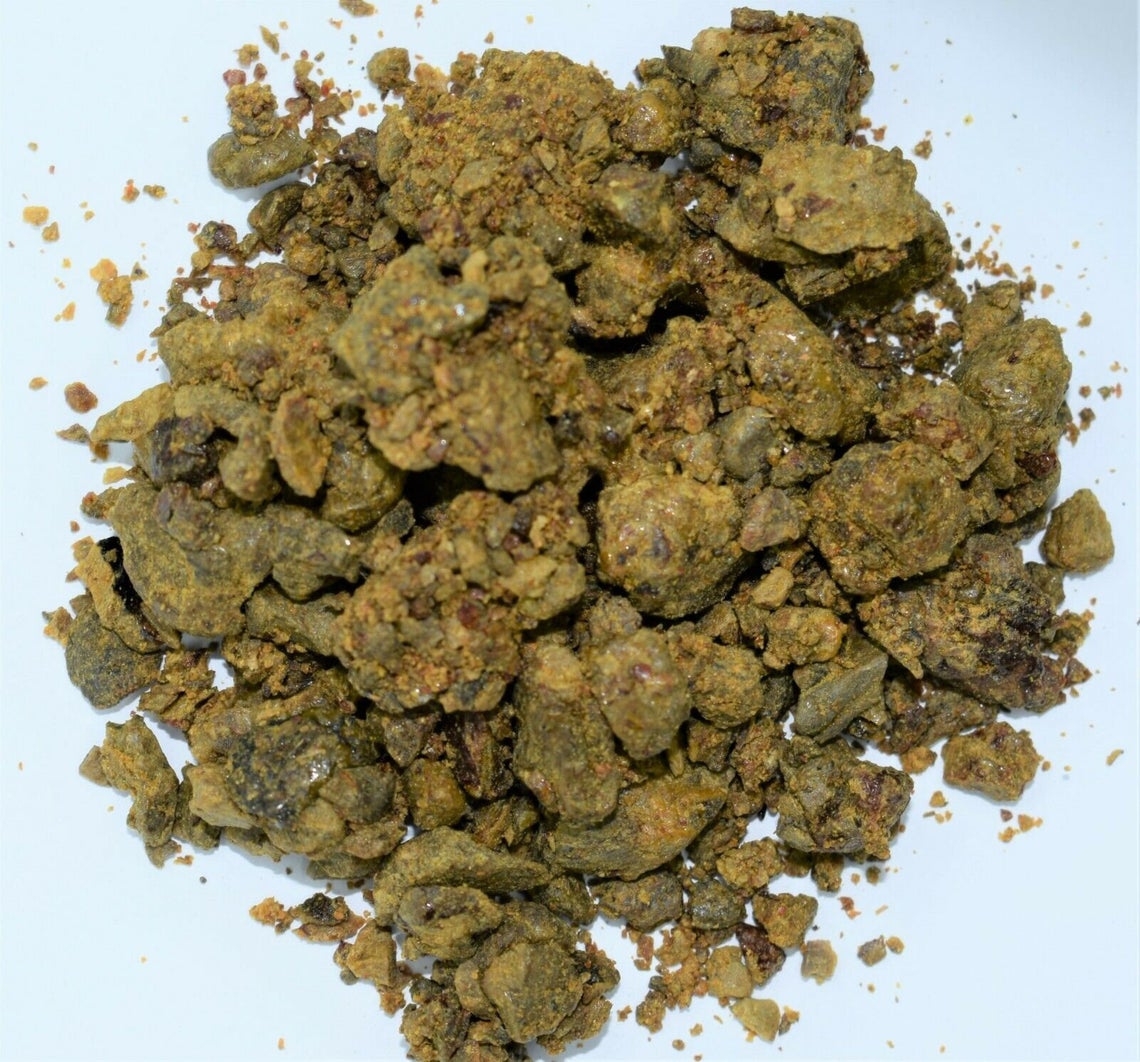
On the left, a net collector. Top right, an example of Portuguese propolis. Bottom left, a propolis from Bulgaria
Although not Organic Certified, since each producer would have to apply for it, and the collecting places varies during the year, always in search for better hive positioning deep in the Brazilian wilderness, propolis is extremely organic. Bees are very sensitive to pesticides and die easily, if a farmer sprays a field nearby, the bees will certainly die. And no propolis will be produced.
 Propolis Perfection - Bee and Propolis Products