
Our company, Propolis Perfection, was born out of love: our love for propolis tincture, and the firm belief of its healing properties. We decided to sell what we already use daily in our lives, in the most honest, straight-forward manner.
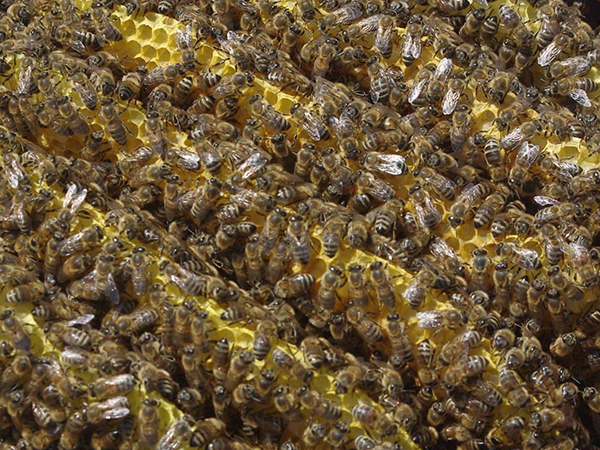
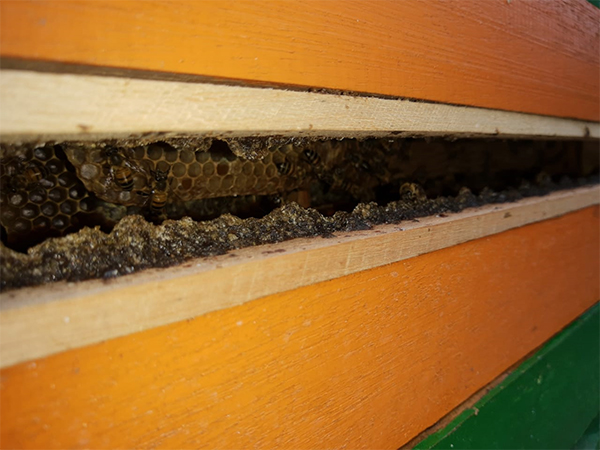
We produce small batches, respecting its natural characteristics, after a careful content´s analysis. Our concept of propolis products is similar to winemaking, respecting the terroir, the origin, season, producer. And, similar to wine, propolis can vary in quality, depending on several factors like brittleness, humidity content, proper storage procedures, time from collecting to final preparation, presence of impurities and amount of wax.
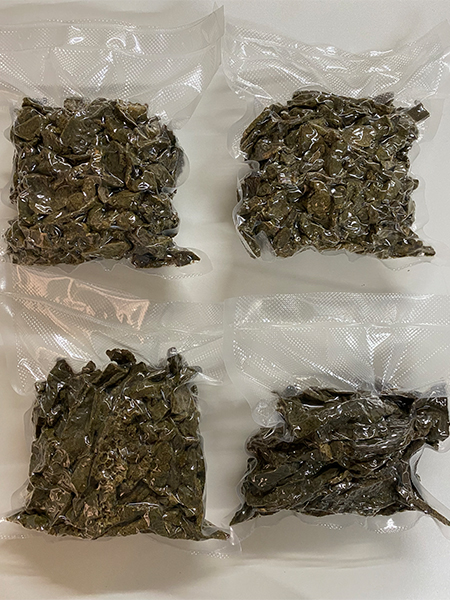
Propolis Perfection only acquires the best propolis available, called Type 1 propolis. Export type, the best there is. And the most expensive.
After careful initial analysis, looking for possible contaminants and removal of small debris, the freshly bought propolis is vacuum packed prior to export in natura to USA, to be processed.
It sure adds cost to our production, but we deeply believe the benefits worth it.
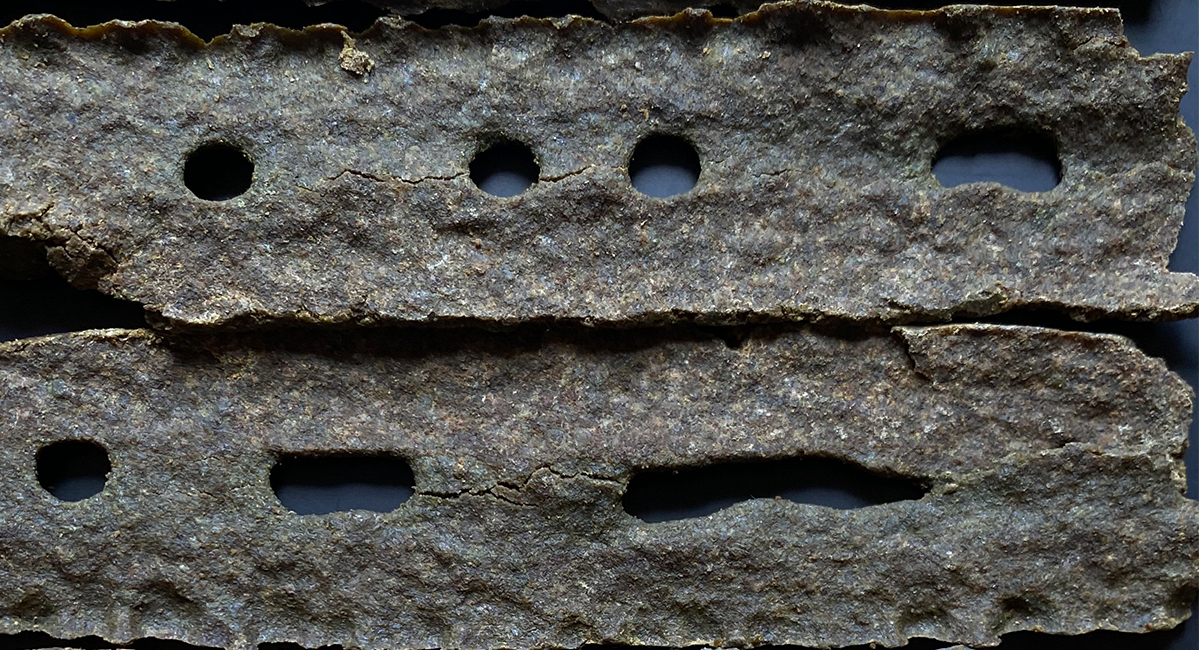
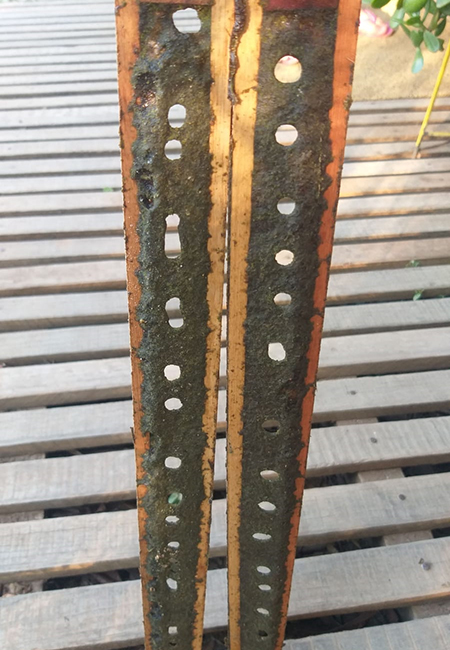
closeup of a First Grade Propolis stripe
Note the homogeneous gap filling, indicating plenty of food and little to none variation in raw material´s availability.
Since the gaps are filled from the border to the inside, and the process takes around 8 to 17 days, appearance can vary due to weather changes and plant´s seasons. If it takes too long to cover it, it indicates that there is not enough sap/resin available in the hive´s vicinity, and quality decreases; the borders, where they started covering, becomes brittle. There is a timeframe to be observed for gap covering, it can´t be longer than 17, 18 days. The holes left are where the bees enter the colony.
All propolis are good
Propolis consumption has virtually no side effects (unless you are allergic to bee products), and it is an excellent immuno-booster. Every propolis type is good for your health, but the consumption of different propolis types is advised, since there are some unique chemical compounds that are present in some types and not in others. For instance, green propolis has a high amount of artepillin-C, and brown has a higher content of some specific flavonoids. Also, same propolis type from different countries present changes in the amount and the type of flavonoids, since they are made from different types of resins and tree saps.
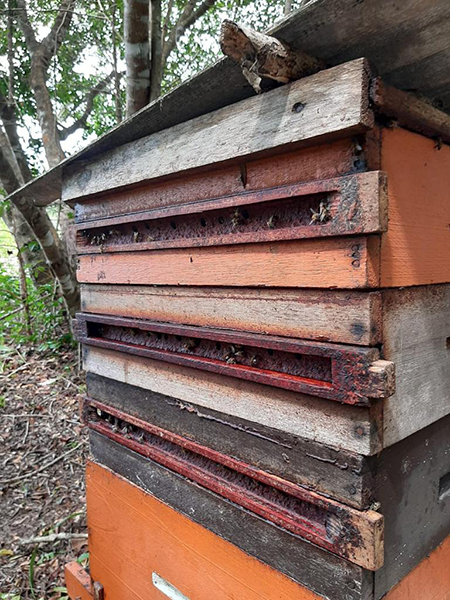
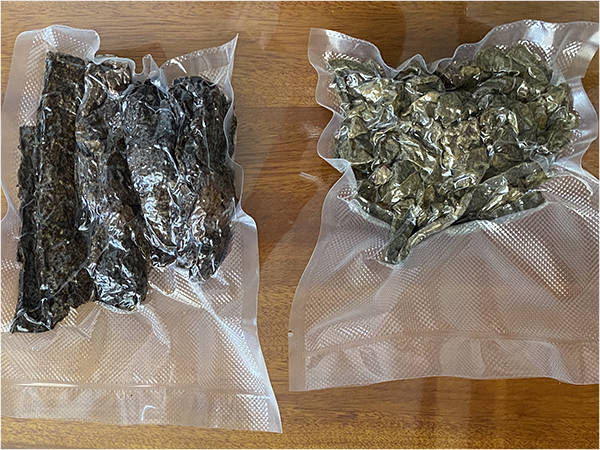
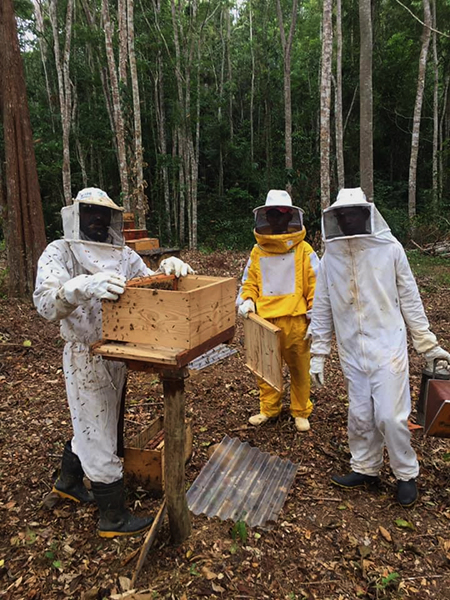
Why propolis work
Bees, in its Godsend hability, ´borrowed´ the defensive system of plants and trees. Trees, when subjected to an external aggression, like a cut, or a hole, produces tree sap to cover it, with antimicrobial properties to seal the ´wound` from contamination. Plants produce resin in its sprouts to protect it from insects. Bees take advantage of this fact, and use it in its own deffense mechanism. If an insect penetrates and dies inside the hive, bees use propolis to embalm it, and thus removing a possible agent of hive disease. The egyptians were aware of this fact, and used propolis as part of the embalming process.
In fact, propolis is so effective for the bees, that they have no immune system of its own; they solely rely on propolis for it. And if it is so good and advantageous for the bees, it sure is good for you as well.
Propolis origins
Propolis (bee glue) has been known for centuries. The ancient Greeks, Romans, and Egyptians were aware of the healing properties of propolis and made extensive use of it as a medicine. In the middle ages propolis was not a very popular topic and its use in mainstream medicine disappeared. However, the knowledge of medicinal properties of propolis survived in traditional folk medicine. The interest in propolis returned in Europe together with the renaissance theory of ad fontes (back to the sources, in this case the return of the Greek Roman philosophy) . It has only been in the last century that scientists have been able to prove that propolis is as active and important as our forefathers thought. Research on chemical composition of propolis started at the beginning of the twentieth century and was continued after WW II. Advances in chromatographic analytical methods enabled separation and extraction of several components from propolis.
- In Egypt, propolis was used in the context of sacred rites such as mummification and embalming.
- For the Romans, each legionnaire always carried a small piece of propolis with them to use, especially during military campaigns.
- In South America, traces of the use of propolis by the ancient, developed civilisation of the Incas have been found.
- In Africa, during the colonial war (1880 et 1902) between the Boers, Dutch people of South Africa, and British soldiers, propolis was widely used for its benefits.
- In Russia, during the Second World War, Soviet clinics commonly used it with success.
Egyptians knew very well the antiputrefactive properties of propolis and used it to embalm cadavers. Greek and Roman physicians Aristoteles, Dioscorides, Pliny, and Galen were familiar with the medicinal properties of propolis. It is not known what methods were used for harvesting it in the ancient world, although writers in Greece and Rome were familiar with it. The Greek Historia Animalium referred to a substance mitys, which was probably propolis, as “a cure for bruises and suppurating sores.”
At least 180 different compounds have been identified so far. Its antibacterial, antiseptic, anti-inflammatory, antifungal, anesthetic, and healing properties have been confirmed. Propolis has been effectively used in treatment of dermatological, laryngological, and gynecological problems, neurodegenerative diseases, in wound healing, and in treatment of burns and ulcers. However, it requires further research that may lead to new discoveries of its composition and possible applications.
Propolis is generally known as the “bee glue”, which is a generic name that refers to the resinous substance accumulated by the bees from different types of plants. The word “propolis” is derived from Greek to mean defense for “pro” and city or community for “polis”, or the beehive, in other words. Propolis functions in sealing holes and cracks and for the reconstruction of the beehive. It is also used for smoothing the inner surface of the beehive, retaining the hive’s internal temperature (35°C), preventing weathering and invasion by predators. Furthermore, propolis hardens the cell wall and contributes to an aseptic internal environment. Propolis generally becomes soft and sticky upon heating. It also possesses a pleasant smell.
Propolis and its extracts have numerous applications in treating various diseases due to its antiseptic, anti-inflammatory, antioxidant, antibacterial, antimycotic, antifungal, antiulcer, anticancer, and immunomodulatory properties.
Andrzej K. Kuropatnicki, Ewelina Szliszka, Wojciech Krol, “Historical Aspects of Propolis Research in Modern Times”, Evidence-Based Complementary and Alternative Medicine, vol. 2013, Article ID 964149, 11 pages, 2013. https://doi.org/10.1155/2013/964149
 Propolis Perfection - Bee and Propolis Products