
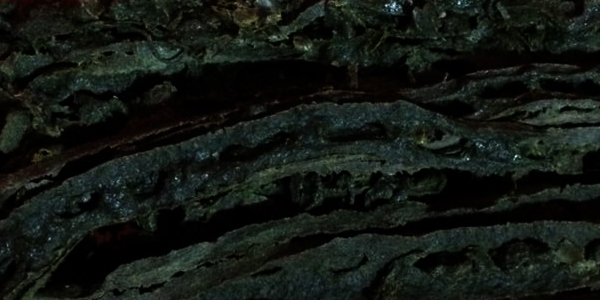
Black Propolis
A rare propolis type from NE of Brazil, from the Caatinga desert, from a tree called Jurema Preta (Mimosa Hostilis benth).
We´ll start selling as a limited batch soon!
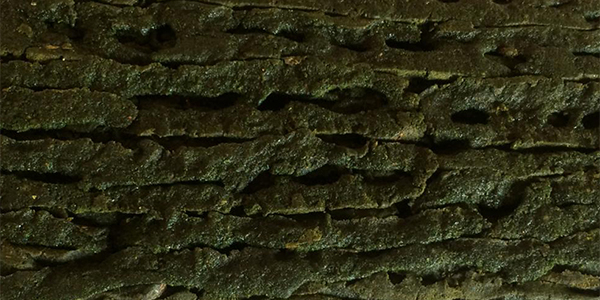
Dark Green Propolis
Considered as a ´special edition´ of the rare black propolis, it is collected only from two months of the year, in the beginning of the raining season.
We also have plans of selling it in the future, as soon as production is available.
Bad Day at the Field
Sometimes bees don´t produce as expected. Result? Lower quality, lower grade propolis. And less money in beekeeper´s pocket.
Green Propolis Feeding Ground
Alecrim do Campo (Baccharis Drancuncufolia), or, in a free translation, ´Rosemary of the field´, filmed by a beekeeper. It grows in the wild, and until recently was considered a field weed.
Ferocious Bees
Here you can have an idea of what is to be a beekeeper. Africanized bees defends its hive fiercely, you can hear them hitting the protective vest.
Defending the Hive
Brazilian africanized bees are lot harder to handle it, and are responsible for several deaths every year in Brazil.
Chemical constituents markers of Brazilian green propolis sample BGP from Baccharis dracunculifolia (SBN97).HPLC test (Park et al.)
| Compounds |
| Coumaric acid |
| Cinnamic acid |
| Quercetin |
| Kaempferol |
| Isorhamnetin |
| Sakuranetin |
| Pinobanskin-3-acetate |
| Chrysin |
| Galangin |
| Kaempferide |
| Artepillin C |
| mg/g |
| 3.56 |
| 1.66 |
| 1.38 |
| 1.77 |
| 0,91 |
| 5.57 |
| 13.92 |
| 3.51 |
| 9.75 |
| 11.60 |
| 82.96 |
Flavonoids and other chemical constituents of Brazilian red propolis from Dalbergia ecastophyllum (Alencar et al.)
| Compounds |
| Rutin |
| Liquiritigenin |
| Daidzein |
| Pinobanksin |
| Quercetin |
| Luteolin |
| Dalbergin |
| Isoliquiritigenin |
| Formononetin |
| Pinocembrin |
| Pinobanksin-3-acetate |
| Biochanin A |
| Contents (mg/g) |
| 0.7 |
| 1.8 |
| 0.3 |
| 1.7 |
| 0.5 |
| 1.2 |
| 0.4 |
| 4.8 |
| 10.2 |
| 3.3 |
| 1.7 |
| 0.5 |
 Propolis Perfection - Bee and Propolis Products